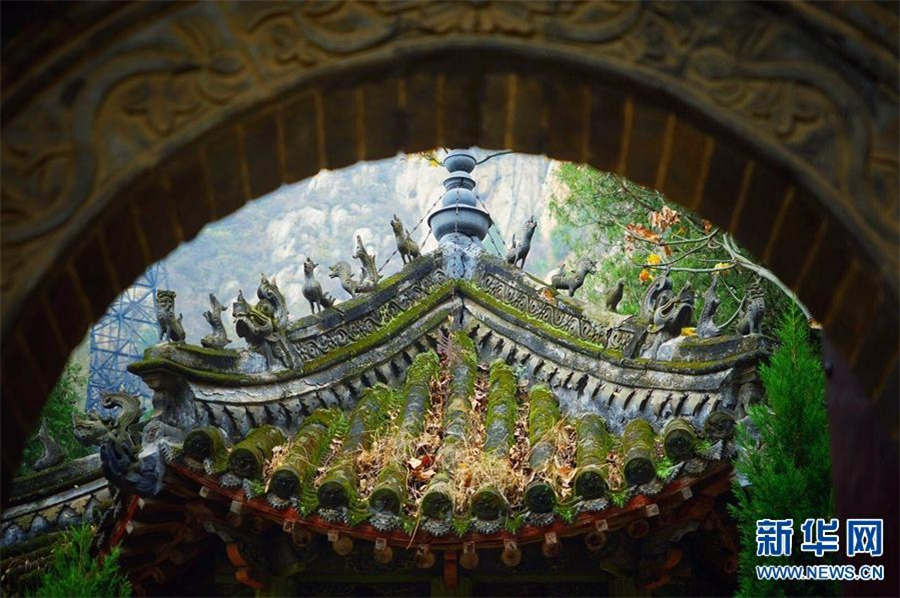
Songshan Mountain
Introduction
Songshan Mountain is one of the Five Great Mountains of China and is located in Dengfeng, Henan province. Renowned for its historical, cultural, and natural significance, it has been a center of religious devotion, education, and martial arts for centuries. With a peak elevation of 1,512 meters at Liantian Peak, the mountain stretches over 60 kilometers and boasts unique geological formations shaped by five distinct geological periods. Often referred to as "The Center of Heaven and Earth", Songshan Mountain has been a focal point for imperial ceremonies and religious practices, reflecting its esteemed status in Chinese culture.
The mountain is home to numerous historical monuments and sites, including ancient temples, academies, and observatories, which collectively embody China's rich cultural heritage. Among its most famous landmarks are the Shaolin Temple, Songyang Academy, Zhongyue Temple, and the Dengfeng Astro Observatory. These sites have outlasted several dynasties and continue to attract millions of visitors annually, showcasing the enduring legacy of Mount Song as a cultural and spiritual hub.
Cultural Heritage
Temples and Monasteries
Songshan Mountain is celebrated for its rich collection of temples and monasteries, which reflect the convergence of Confucianism, Buddhism, and Taoism. Among these, the Shaolin Temple stands out as a globally recognized symbol of martial arts and Zen Buddhism. Established during the Northern Wei Dynasty (386–534), the temple is renowned for its integration of Zen philosophy and martial arts training. Covering an area of 36,000 square meters, Shaolin Temple attracts millions of visitors and martial arts enthusiasts annually, serving as a holy land for spiritual cultivation and physical discipline.
Another notable site is the Zhongyue Temple, a Taoist sanctuary located at the southern side of Taishi Mountain. First established in the 3rd century BC, the temple flourished under the patronage of Empress Wu Zetian in 688 AD. Today, it spans an area of 100,000 square meters and features over 400 rooms, including the grandiose Main Hall and the Zhonghua Gate. The temple is renowned for its inscriptions on tablets, which are valuable resources for calligraphic research. Zhongyue Temple exemplifies the architectural and cultural significance of Taoist traditions in the region.
The Songyang Academy, one of the Four Great Academies of the Song Dynasty, is another cultural gem of Songshan Mountain. Built in 484 AD, the academy played a pivotal role in the development of Cheng-Zhu Neo-Confucianism. Its serene setting, surrounded by hills and clear springs, made it an ideal place for scholarly pursuits. The academy houses ancient relics such as the General Cypress, believed to be the oldest cypress tree in China, and the Great Tang Stele, which further enrich its historical value.
Martial Arts Connection
Songshan Mountain is intrinsically linked to the development and global dissemination of martial arts, particularly through the Shaolin Temple. The temple is regarded as the birthplace of Shaolin Kung Fu, a martial art that combines physical techniques with Zen principles to achieve inner peace and invincibility. Shaolin Kung Fu has gained international acclaim, with 162 Shaolin cultural centers established in over 50 countries and regions. The temple hosts various martial arts events, including the Shaolin Kung Fu Games, which bring together practitioners from around the world to celebrate and advance the art form.
The mountain also serves as a hub for Chan Wu Yi, a holistic practice that integrates Zen meditation, kung fu, and traditional Chinese medicine. Promoted by Master Shi Dejian, Chan Wu Yi emphasizes internal cultivation and has been shown to improve psychological and physical well-being. The Songshan Buddhist Academy, located near the Shaolin Temple, is the main practice center for Chan Wu Yi and attracts disciples from diverse backgrounds. Research on Chan Wu Yi has demonstrated its benefits in enhancing brain function and alleviating emotional and physical ailments.
Tourism
Songshan Mountain is a premier tourist destination, offering a blend of natural beauty, historical landmarks, and cultural experiences. Designated as an AAAAA scenic spot, the mountain is ideal for sightseeing from late March to early November. Visitors can explore its dramatic peaks and valleys, shaped by ancient geological movements, as well as its well-preserved temples and academies. The Shaolin Zen Music Ritual, a large-scale live-action performance, captivates audiences with its depiction of Shaolin history, culture, and martial arts against the backdrop of the mountain's stunning landscapes.
Tourists can also enjoy the Chanxinju Homestay in Yangjiamen village, which combines traditional rural life with cultural activities such as Shaolin Kung Fu lessons and vegetarian dining. The village's picturesque setting, with old brick walls, flowing water, and ancient trees, provides a tranquil retreat for visitors seeking a connection with nature and history.
Songshan Mountain continues to attract millions of visitors annually, offering a unique opportunity to experience China's rich cultural heritage and natural splendor. Its historical monuments, martial arts legacy, and scenic beauty make it a must-visit destination for travelers and scholars alike.








